Blog
Sore Throat From Vaping: Complete Guide to Causes, Prevention, and Treatment


The UK has witnessed a surge in vaping, as recent data shows over 4.5 million adults are now regularly using e-cigarettes, which is a significant increase from 3.6 million in 2021. This rise is predominantly among young adults aged 18-24 and has transformed vaping from a smoking demise aid into a widespread phenomenon. While the UK government promotes vaping as an alternative to traditional cigarettes, a growing body of evidence suggests these devices aren’t without their health implications.
People across vaping forums and social media platforms consistently highlight one particular concern: Sore throat from vaping, which affects both beginners and experienced vapers. This irritation consists of a persistent scratchy sensation, burning feeling, or inflammation, and has prompted many healthcare providers to investigate the relationship between e-cigarette use and throat health. As more people incorporate vaping into their daily routines, medical professionals are seeing several patients reporting a sore throat from vaping, raising questions about the long-term impact of this popular habit on respiratory health.

Why Vaping Causes Sore Throat
Vaping can trigger throat irritation through several mechanisms working in combination. The propylene glycol (PG) and vegetable glycerin (VG) in e-liquids have a dehydrating effect on throat tissue while varying nicotine concentrations directly impact throat sensation and can cause significant throat pain from vape use. The temperature of the vapour itself can cause thermal irritation, especially with higher-wattage devices or extended vaping sessions. Chemical compounds formed during vaporisation, including aldehydes and metal particles from the heating coil, may further aggravate the throat lining. Those seeking vaping without throat burn should consider lowering nicotine concentrations, reducing the PG content, and vaping at lower temperatures, as well as keeping on top of your hydration game.
Sore Throat Vape Symptoms
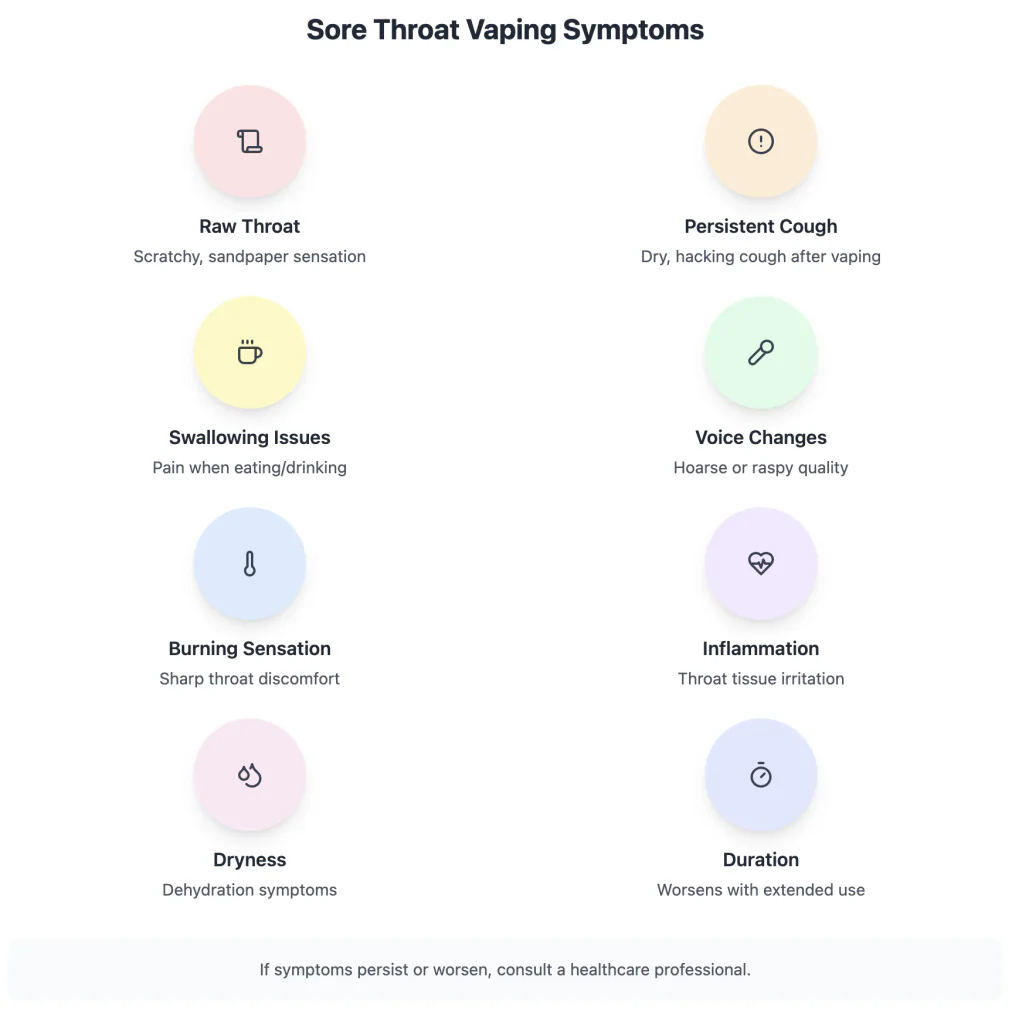
- Raw, scratchy sensation in throat: Feels like constant irritation or sandpaper sensation when swallowing, often worse immediately after vaping.
- Persistent cough: Dry, hacking cough that may worsen during or after vaping sessions.
- Difficulty swallowing: Discomfort or mild pain when eating, drinking, or swallowing saliva.
- Hoarse or raspy voice: Changes in voice quality, particularly after extended vaping sessions.
- Burning sensation during inhale: Sharp, uncomfortable feeling in throat while taking a drag.
- Throat dryness and irritation: Constant feeling of dehydration and inflammation in throat tissue.
- Increased thirst: Frequent need to drink water due to throat dryness and irritation
Risk Factors
Several key risk factors can significantly impact throat irritation when vaping. Using high nicotine concentrations, especially above 12mg/ml, directly increases throat hit and potential discomfort. Adjusting these factors can provide relief for those seeking a vape sore throat remedy. Chain vaping without breaks prevents throat tissue recovery, while improper device settings like excessive temperatures can cause harsh hits. Also, low-quality e-liquids may contain impurities or unbalanced ingredients irritating the throat lining.
| Risk Factor | Details |
| High nicotine strength | E-liquids with excessive nicotine concentration |
| Chain vaping | Continuous/excessive use without breaks |
| Device settings | Unsafe temperature/wattage configurations |
| Poor quality e-liquids | Substandard or contaminated vaping materials |
Prevention Tips
Choosing sensible vaping practices can help prevent throat discomfort. Staying well-hydrated throughout the day keeps throat tissues moisturised, while regular cleaning and maintenance of your device ensure optimal performance. For those preventing sore throat vape issues, finding the right temperature and wattage settings for your specific setup is crucial. Choose high-quality e-liquids from reputable manufacturers and companies, like us at Haze CBD, to avoid cheaper alternatives containing harsh ingredients. Take regular breaks between vaping sessions to allow your throat to recover and prevent irritation, which can help reduce a sore throat from vaping.
Treatment Options
If you’re experiencing throat irritation from vaping, start with soothing home remedies like warm salt water gargles and honey tea, and stay hydrated to reduce inflammation. Consider over-the-counter treatments such as throat lozenges, anti-inflammatory sprays, or pain relievers to manage discomfort and sore throat vape symptoms for quick relief. While most cases improve with these measures, seeking medical attention is important if you experience excruciating pain, difficulty breathing or swallowing, fever lasting more than 48 hours, or persistent symptoms beyond a week. Switching to lower nicotine concentrations or adjusting your device settings may help address why vaping burns the throat and prevent irritation.
Further Remedies
When experiencing throat irritation from vaping, giving your throat time to heal properly is crucial. Continuing to vape while your throat is irritated can significantly worsen inflammation and potentially lead to more serious vape throat irritation symptoms. Many users report a sore throat from vaping that can range from mild discomfort to severe pain, particularly when using high-nicotine e-liquids or vaping frequently.
Instead of pushing through the discomfort, take a complete break from vaping for at least 48-72 hours or until symptoms fully resolve. Focus on staying hydrated during this recovery phase, using throat lozenges, and considering temporary nicotine alternatives like patches or gum to manage cravings will be best. If symptoms persist beyond a week or worsen after stopping, consult a healthcare provider to rule out complications.
Long-term Considerations
Long-term vaping can lead to persistent throat inflammation. But that’s not all: altered taste perception and potential respiratory issues that may worsen over time too. Understanding the causes of sore throat after vaping and implementing proper vaping throat pain relief techniques are crucial for users who continue the habit. Those concerned about chronic effects should consider nicotine replacement therapy or working with healthcare providers on strategies that align with their personal goals.
Key considerations:
- Monitor for recurring symptoms like persistent cough, voice changes, or difficulty swallowing.
- Consider gradually reducing nicotine content or switching to nicotine patches/gum.
- If you continue vaping, maintain proper device maintenance, stay hydrated, and use appropriate temperature settings.
Conclusion
Taking control of your vaping habits is crucial for protecting your throat health and overall well-being. Understanding device settings, proper maintenance, and selecting appropriate vape juice for sore throat can significantly reduce irritation. Whether you choose to continue vaping with harm-reduction strategies or explore cessation options, remember that your health should always be the priority. For persistent sore throat from vaping, consult healthcare providers and explore resources from organisations like the NHS Stop Smoking Service or local smoking cessation programs for personalised support and guidance.