Blog
Does Vaping Make You Gain Weight? Understanding the Facts


Recent years have shown how popular vaping has emerged to be, with millions of people worldwide turning to e-cigarettes to combat their addiction to traditional smoking. As this trend continues to grow, many people have raised questions about its health impacts, including whether or not vaping affects weight in any way. Some people see vaping as a potential tool for managing weight, especially when regular cigarettes express concerns about its effects on appetite and metabolism in the long run. Our guide aims to discuss the connection between vaping and weight gain, which will explore both direct and indirect effects on body mass. Whether you’re a current vaper, considering vaping, or simply seeking information, we will address the crucial question that’s on everyone’s minds: does vaping make you gain weight?

The Science Behind Nicotine and Weight
Nicotine’s difficult relationship with body weight extends beyond simple appetite control. This stimulant activates the body’s sympathetic nervous system, which increases metabolic rate by approximately 7-15% by elevating heart rate and thermogenesis (heat production). This metabolic boost can result in burning 150-200 calories daily. Nicotine also functions as a powerful appetite suppressant by interacting with hypothalamic neurons that regulate hunger signals and affecting hormones like ghrelin, often called the ‘hunger hormone.
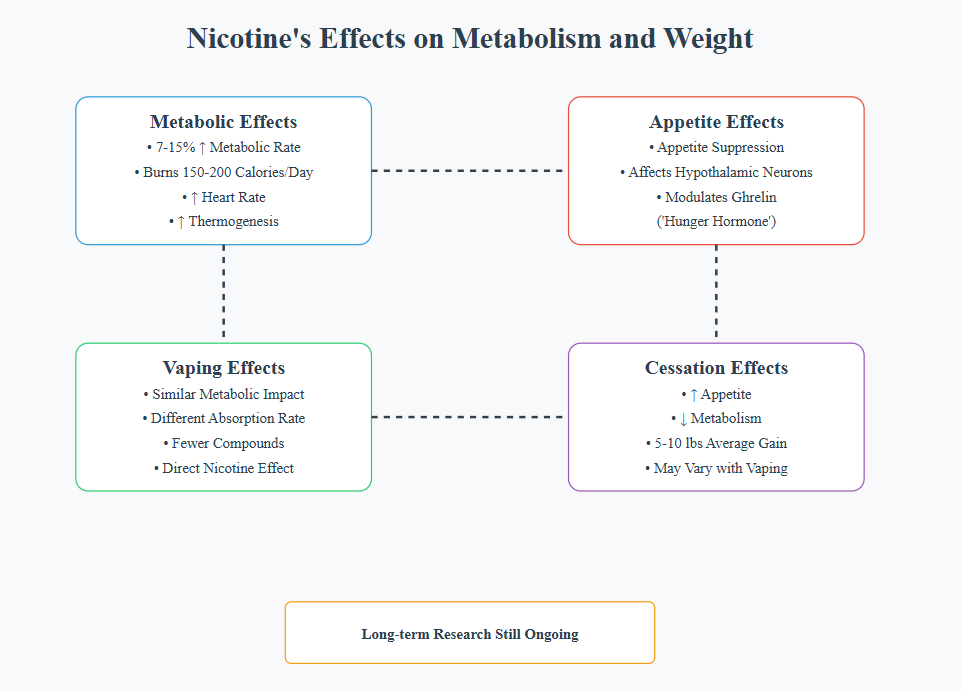
Does vaping affect metabolism? Research suggests that, like traditional smoking, vaping delivers nicotine that influences metabolic processes, though the delivery method and absorption rates differ. While conventional cigarettes contain thousands of additional compounds, e-cigarettes and weight management show a more direct nicotine-only effect on metabolism. However, when people quit either smoking or vaping, they often experience increased appetite and slowed metabolism, which can lead to weight gain of 5-10 pounds on average. Does vaping make you gain weight? Studies indicate that transitioning from smoking to vaping may help mitigate post-cessation weight gain, though long-term research is still ongoing.
Vaping vs. Smoking: Weight Implications
As per studies, quitting smoking often leads to weight gain; an average weight gain increase of 5-10 pounds is suspected in the first year after cessation. This is due to changes in metabolism and increased appetite. When comparing vaping vs smoking for weight implications, research suggests that e-cigarette users may experience less weight gain during the transition, possibly due to the hand-to-mouth action and appetite-suppressing effects of nicotine being maintained. The Royal College of Physicians in the UK reports that vaping appears to be less associated with post-cessation weight gain than complete nicotine withdrawal. However, more long-term studies are needed on vaping nicotine weight gain.
- Studies indicate that 80% of smokers gain weight after quitting, with the highest risk occurring in the first 3 months when withdrawal symptoms peak.
- Vaping may help mitigate weight gain through continued nicotine delivery and behavioural substitution of the smoking ritual, though effects vary by e-liquid composition and usage patterns.
- UK data from Public Health England suggests that smokers who switch completely to vaping tend to gain less weight than those who quit cold turkey, reporting an average difference of 2-3 pounds less weight gain after 6 months.
Factors That May Influence Weight When Vaping
The relationship between vaping and weight management involves several interconnected factors. Nicotine in e-liquids can affect metabolism and appetite suppression, with higher concentrations potentially having a stronger impact on weight control. When transitioning from traditional cigarettes to vaping, many individuals experience changes in their eating patterns as their bodies adjust to different nicotine delivery methods.
| Factor | Description |
| Nicotine Content Variations | Changes in nicotine levels can affect appetite and metabolism |
| Switching from Smoking to Vaping | Transition period may impact eating habits and metabolism as body adjusts |
| Flavour Choices | Sweet or food-like flavours may influence cravings and eating patterns |
| Behavioral Patterns | Oral fixation satisfaction and hand-to-mouth habits can affect snacking behaviour |
Vape and appetite changes often occur simultaneously during this transition period, with some users reporting fluctuations in their hunger signals. The wide variety of available e-liquid flavours, from sweet desserts to mint and fruit, can influence eating behaviours through psychological satisfaction or trigger cravings for similar foods. Additionally, the hand-to-mouth motion and oral fixation aspects of vaping may substitute for snacking, affecting overall caloric intake throughout the day. These various elements work together to influence body weight, leading many to wonder if vaping makes you gain weight or if it is a myth.
Common Myths and Misconceptions
Research shows that many common beliefs about vaping and weight gain are based on misconceptions rather than scientific evidence. While some people report weight changes when transitioning from smoking to vaping due to altered appetite and metabolism, studies have not demonstrated a direct causal relationship between weight gain effects from vaping and significant body mass changes. Here are some myths and misconceptions about vaping and weight that will make you rethink the question: Does vaping make you gain weight?
- The idea that vaping automatically leads to weight gain is a myth, as individual factors like diet, exercise, and overall lifestyle play more crucial roles.
- Nicotine, whether from smoking or vaping, can suppress appetite in some individuals.
- People often mistake correlation (quitting smoking and gaining weight) with causation (assuming vaping directly causes weight gain).
- Many weight changes reported during vaping transition periods may be due to changed eating habits or stress, not the vaping itself.
- Scientific studies have found no consistent evidence that vaping makes you gain weight when controlling for other lifestyle issues.
Tips for Managing Weight While Vaping
Maintaining a balanced weight is important for vaping in your busy lifestyle. Start by establishing consistent meal times and focusing on nutrient-dense whole foods that sustain energy throughout the day. Be mindful of regular physical activity through structured workouts or active hobbies like hiking or cycling to help kickstart your metabolism and manage stress that might trigger excessive vaping.
When it comes to vaping and calorie intake, be careful when purchasing flavoured e-liquids, as these may trigger sugar cravings or affect appetite patterns. Consider tracking your vaping sessions in a journal alongside your meals to identify any connections between vaping frequency and eating habits. Stay hydrated with water, as vaping can sometimes be mistaken for hunger, and practise mindful vaping by setting specific times and places for use rather than vaping continuously throughout the day.

While some worry about the question “does vaping make you gain weight,” research suggests that weight changes are more likely related to overall lifestyle habits and dietary choices rather than vaping itself.
Health Considerations Beyond Weight
Beyond just the number on the scale, overall health encompasses many important factors. In addition, vaping may be touted as a healthier alternative to cigarettes, but the long-term impacts of vaping on the body are still not fully understood. Recent studies show that vaping can lead to weight fluctuations, with some users experiencing unexpected weight gain or loss. The effects of vaping on body weight can vary significantly between individuals. Taking a balanced approach to health is crucial, so you should generally focus on sustainable lifestyle changes rather than quick fixes. Try and incorporate a variety of exercises, mindful eating habits, and managing your stress to support holistic well-being without the risks associated with vaping or other unhealthy weight management techniques.
Conclusion
To conclude, existing research on whether vaping directly impacts weight still needs to be clarified. Some studies suggest a link between vaping and weight gain. In contrast, others belittle the claim, as factors such as nicotine levels, flavour preferences, and individual metabolism can all impact how vaping affects weight.
Some studies suggest that the nicotine in e-cigarettes quashes appetite, leading to weight loss in some vapers. However, other research indicates that the oral fixation and chronic nature of vaping can trigger increased snacking and calorie intake. Additionally, some vapers may replace smoking with high-calorie comfort foods, which ultimately leads to weight gain.
The impact of vaping on weight appears to vary from person to person. Those concerned about potential weight changes when switching from smoking to vaping should monitor their diet and exercise habits closely. Speaking to a healthcare provider can also help determine the best solution for managing weight while transitioning away from traditional cigarettes.
If you are concerned about weight changes from vaping, be mindful of your eating and exercise habits, and consider consulting a healthcare provider to develop a plan that works best for your individual needs.
Resources and References
Scientific Studies:
- A study published in the 2018 journal Obesity Science & Practice found that “Does vaping make you gain weight” – compared to non-users. E-cigarette users had a higher chance of weight gain and obesity over 2 years.
- Research from Public Health England in 2015 also suggested that quitting smoking and jumping onto vaping may lead to a small amount of weight gain, but does vaping make you gain weight – the benefits of quitting smoking are greater than any potential weight increase.
- A 2021 review in the journal Nicotine & Tobacco Research concluded, “Does vaping make you gain weight?” – the evidence on the relationship between vaping and weight change is mixed, with some studies showing weight gain and others showing no effect.
Expert Opinions
According to the NHS in the UK, “Does vaping make you gain weight?” – while some people may gain a small amount of weight when switching from smoking to vaping, this is often temporary and less than the weight gain experienced when quitting smoking without using e-cigarettes.
Dr Lion Shahab, a tobacco and alcohol researcher at University College London, has questioned whether vaping affects weight. Does vaping make you gain weight? Any weight gain associated with vaping is likely due to quitting smoking, not the vaping itself, and is usually modest.
Public Health England advises, “Does vaping make you gain weight?” – the health benefits of switching from smoking to vaping outweigh the potential for minor weight gain.
Additional Reading:
The Impact of E-Cigarettes on Weight and Obesity” – a review article in the journal Current Addiction Reports 2019.
“Vaping and Weight Gain: What’s the Connection?” is an article from the UK charity Action on Smoking and Health (ASH).
The CDC in the USA published an article titled “Does Vaping Cause Weight Gain? Here’s What the Research Says.”